
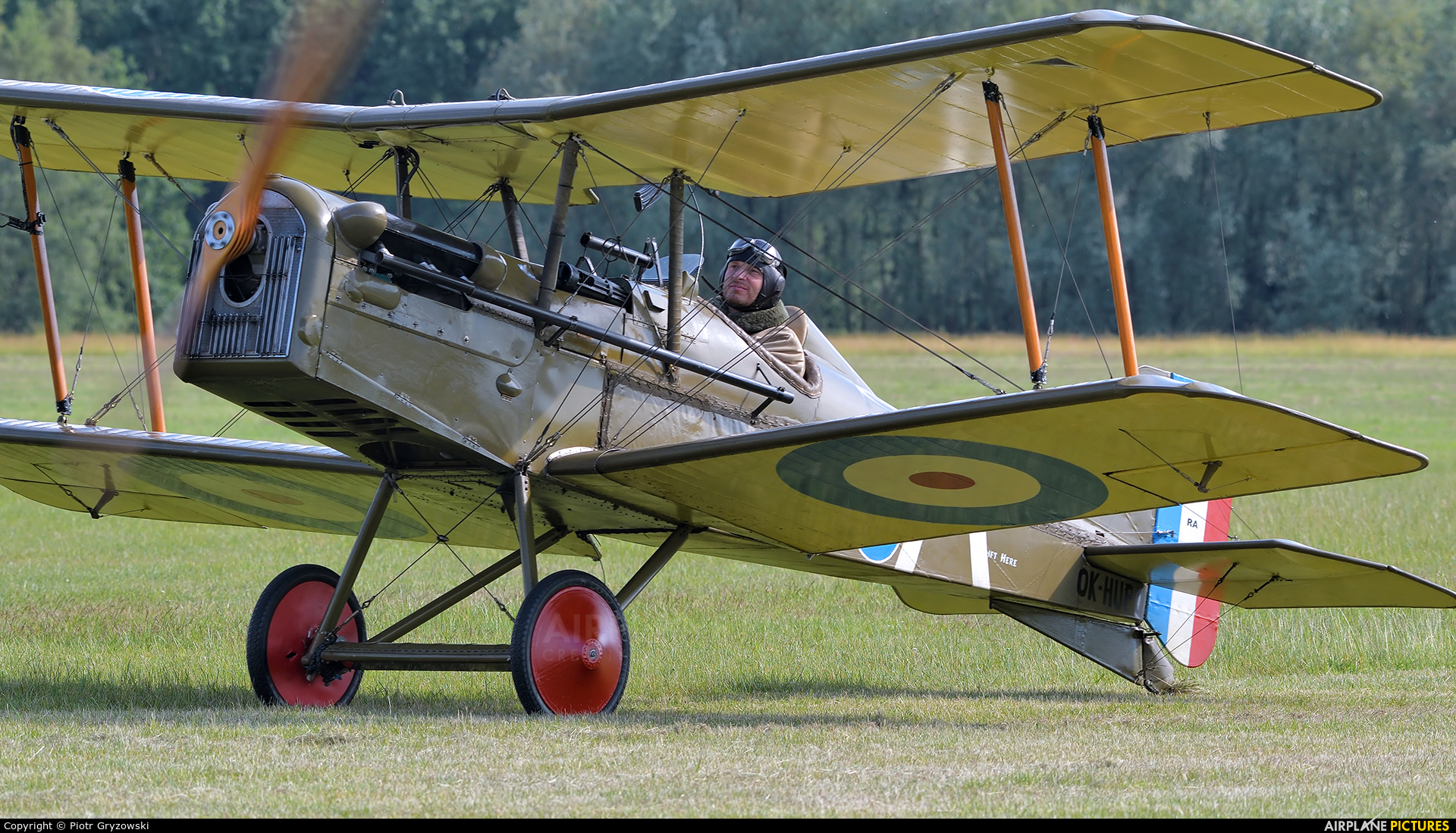
Royal Aircraft Factory BE. 9 History
The designers wanted to create an aircraft that combined the high performance of tractor configuration planes with a good field of fire for the machine gun operated by the observer. They modified a B.E.2c aircraft by adding a small wooden box in front of the propeller where a gunner could sit with a Lewis gun. They removed the normal observer's cockpit, moved the engine backward, increased the wingspan, and added a larger fin.
However, this design had several drawbacks. The gunner was in a dangerous position, at risk of being injured by the propeller or crushed by the engine even in minor crashes. The Royal Aircraft Factory did not pursue further development of this type, although a similar concept called the French SPAD S.A. was used in service. The availability of synchronization gears also made the design unnecessary.
The single prototype of this modified aircraft flew for the first time in August 1915. Initial tests showed that its performance was not significantly different from the original B.E.2c, but there were difficulties in communication between the pilot and observer due to the engine and propeller separating them. The B.E.9 was then sent for field testing in France by several units. However, the feedback from the testing was mostly negative, with concerns about the machine's danger to the observer. Major Hugh Dowding described it as "an extremely dangerous machine," and Hugh Trenchard, head of the RFC in France, stated that it couldn't be recommended. The B.E.9 was returned to the UK in early 1916. Lt Duncan Grinnell-Milne expressed relief that the aircraft's combat experience was inconclusive and that it was not mass-produced.
Specification
Basics
Years of Service: 1915
Origins: UK
Status: Development ended.
Crew: 2
Production: 1
Manufacturer: Royal Aircraft Works - United Kingdom
Operators: UK
Roles
Air-to-air combat, fighter
The general ability to actively attack other aircraft of similar form and function, usually using guns, missiles and/or airborne missiles.
Intelligence Surveillance Reconnaissance (ISR), reconnaissance
Monitor ground targets/target areas to assess surrounding threat levels, enemy strength, or enemy movement.
X-Plane (development, prototyping, tech demos)
Aircraft designed for prototyping, technology demonstration, or research/data collection.
Dimensions and Weight
Length: 29.0 feet (8.85m)
Width/span: 41.0 feet (12.50m)
Height: 11.5 feet (3.50m)
Performance
Installed: 1 x Royal Aircraft Factory (RAF) 1a 90 hp V8 air-cooled engine driving a four-blade wood (front pilot, rear gunner) propeller in a tractor arrangement.
Maximum speed: 84 km/h (135 km/h | 73 kn)
Rate of climb: 225 ft/min (69 m/min)
Weapon
1 Lewis .303 caliber (7.7mm) cannon mounted in the main gunner's cabin.
 Argentina
 Armenia
 Australia
 Austria
 Austria-Hungary
 Belgium
 Brazil
 United States
 Brunei
 Bulgaria
 Canada
 Chile
Chile China
China Colonial America
 Colombia
 Confederate States
 Croatia
 Czech
Czech Denmark
 Egypt
Egypt Finland
 France
 Georgia
 Germany
 German Imperial
 Greece
 Holland
 Hungary
 India
India Indonesia
 Iran
Iran Iraq
Iraq Ireland
 Israel
 Italy
Italy Japan
Japan Japan (1940)
 Jordan
 Kingdom of Italy
 Malaysia
 Mexico
 Myanmar
 Nazi Germany
 Netherlands
 New Zealand
 North Korea
 Norway
 Pakistan
 Peru
Peru Philippines
 Poland
 Portugal
 Prussia
 Romania
 Russia
 Saudi Arabia
 Serbia
 Singapore
 Slovakia
 Slovenia
 South Africa
 South Korea
 Soviet Union
 Spain
Spain Sweden
 Switzerland
 Syria
Syria Taiwan
 Thailand
 Turkey
 UAE
UAE Ukraine
 Vietnam
 Yugoslavia