
History of the Aerovel Flexrotor
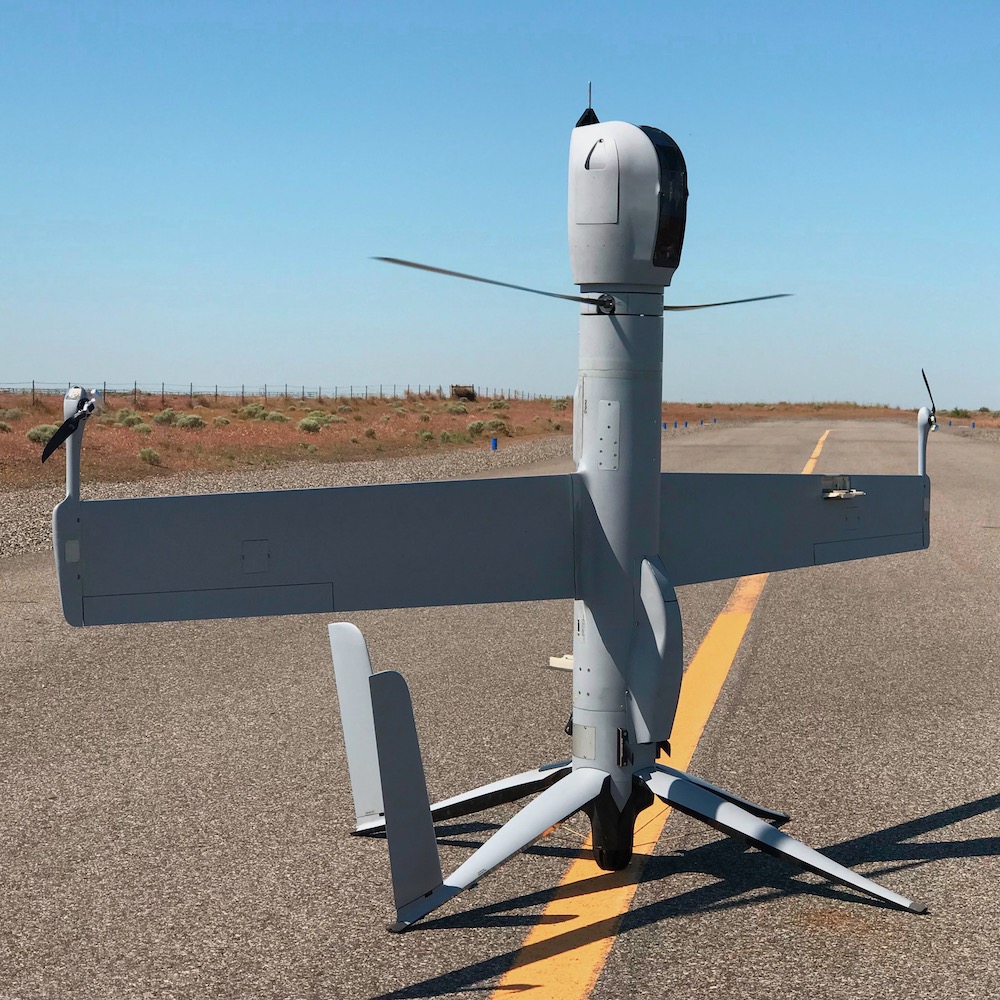
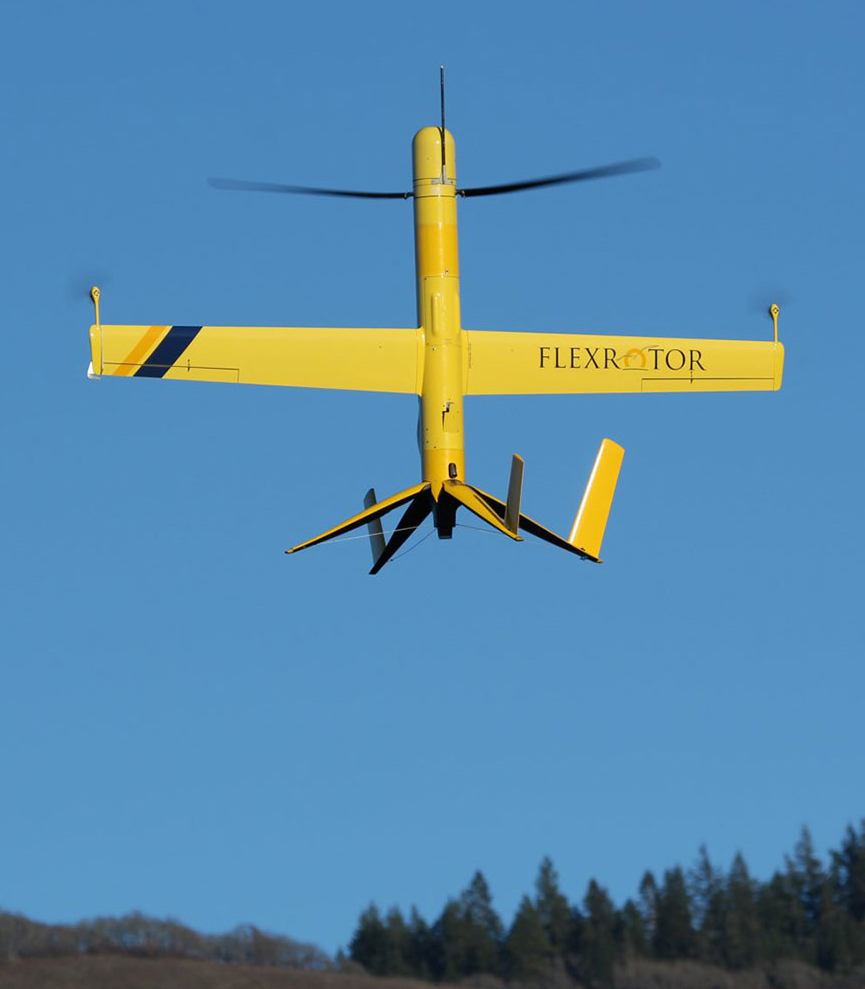
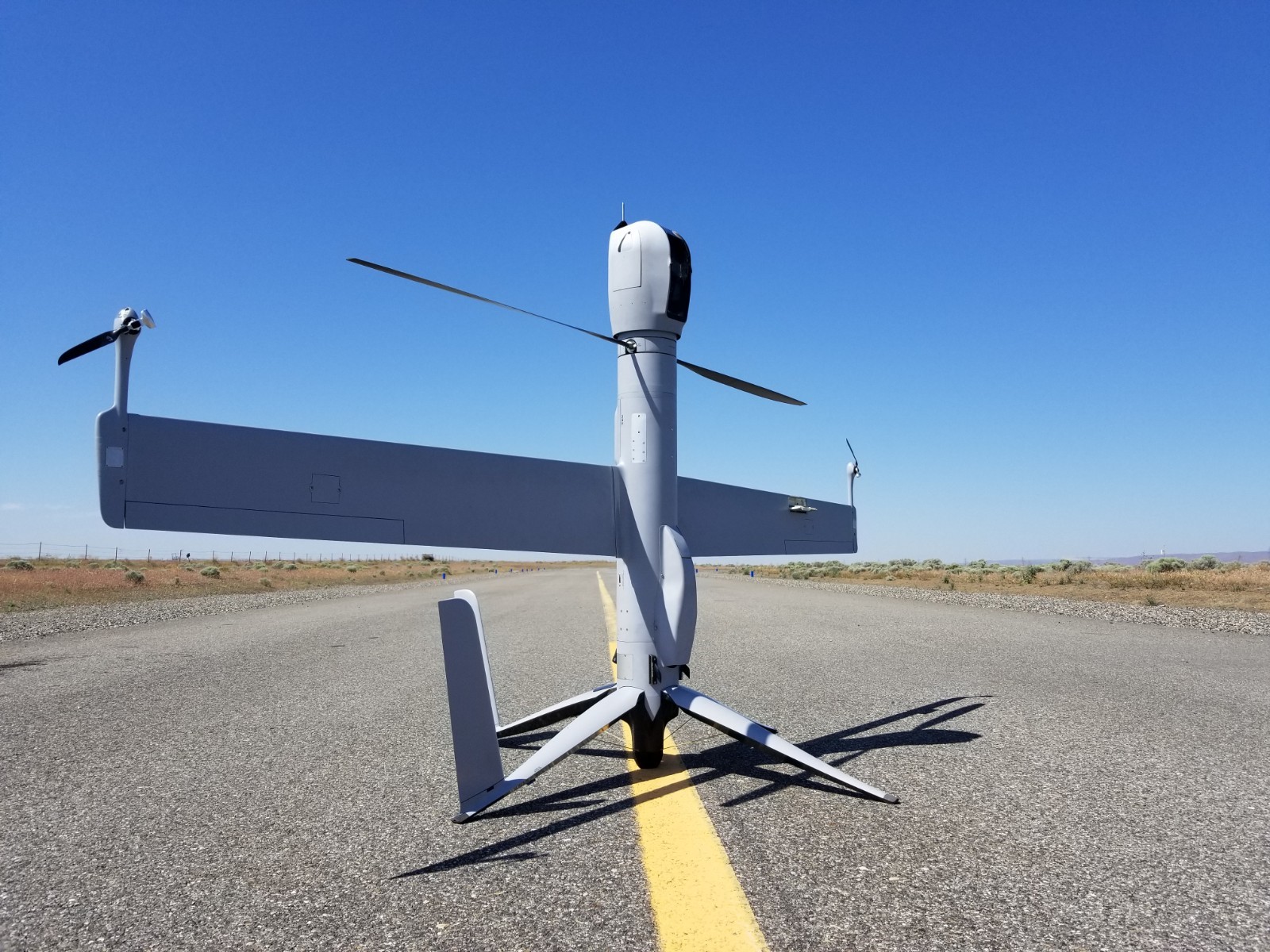
The Aerovel "Flexrotor" is a highly advanced Small Tactical Unmanned Aerial System (STUAS) known for its exceptional performance in intelligence, surveillance, target acquisition, and reconnaissance (ISTAR) missions on land and at sea. It boasts unique "tailstock" capabilities, enabling vertical take-off and landing (VTOL) in confined spaces, which enhances its tactical flexibility.
Operating the Flexrotor is user-friendly, with just one operator needed for quick deployment. Equipped with stabilized optics, it offers real-time imaging for search and track operations, even in low-light or nighttime conditions. With an impressive endurance of approximately 30 hours and a video range of up to 120 km, the drone can operate effectively in various weather conditions while carrying a payload of up to 17 pounds for specialized missions.
The aircraft's design features a distinctive curved rotor arrangement, with the lift/drive propeller unit situated on the "neck" of the fuselage, behind the nose section. This arrangement allows for smooth transitions from dive to level flight during takeoff. Moreover, the Flexrotor can autonomously fly along specified waypoints and launch from prepared or unprepared areas, including ship decks. Its stabilizers ensure stable and controlled flight throughout its operations.
In summary, the Aerovel Flexrotor is a cutting-edge STUAS ideally suited for ISTAR missions due to its VTOL capabilities, long endurance, impressive range, and stable flight performance, making it a valuable asset in both military and civilian applications.
Specification
Basics
Years of service: 2022
Origins: United States
Status: Under development
Crew: 1
Production: 10
Manufacturer: Aerovel - USA
Carrier: US (probably)
Roles
Close Air Support (CAS)
Designed to operate near active ground elements with a wide range of air-to-surface weapon and ammunition options.
Special Mission: Search and Rescue (SAR)
Ability to locate and evacuate personnel from potentially hazardous or dangerous areas, such as downed pilots at sea.
Intelligence Surveillance Reconnaissance (ISR), reconnaissance
Monitor ground targets/target areas to assess surrounding threat levels, enemy strength, or enemy movement.
Special Forces
Serve special forces/special operations forces and missions.
Unmanned
Aircraft designed (or later developed) have inherent unmanned capabilities and can fill a variety of battlefield roles.
Notable Features
Vertical Takeoff/Landing (VTOL)
The series has the tactical capability of vertical take-off and/or landing, a characteristic usually associated with helicopters.
Folding wings
The main aircraft is designed to be foldable, increasing storage capacity on land and at sea.
Sturdy aircraft frame
The inherent ability of the airframe to take significant damage.
High performance
The ability to fly and operate at higher altitudes than the average aircraft of the day.
Extended Range Performance
Ability to travel long distances using on-board fuel supplies.
Operation Lakes
Able to operate over the ocean and survive certain harsh marine environments.
Scalable
Has retractable/retractable landing gear to maintain aerodynamic efficiency.
Unmanned operation
The design features the ability to fly without a pilot, with actions controlled by onboard programming and/or ground operators.
Autonomous operation
The design features autonomous flight operations through artificial intelligence or onboard pre-programming.
Camera equipment
Payload supports photographic devices that provide still and/or live image/video results.
Dimensions and Weight
Length: 6.6 feet (2.00m)
Width/span: 7. 2 feet (2.20m)
Cured weight: 55 lbs (25kg)
MTOW: 73 lbs (33kg)
Wgt Difference: +18 pt (+8kg)
Main Aircraft Structure
Monoplane
Designed to use a single main wing main aircraft; this is the most popular arrangement of main aircraft.
Shoulder
The main aircraft is mounted on the upper part of the fuselage, usually on an imaginary line that intersects the pilot's shoulders.
Straight
Floor plans involve the use of simple, straight main plan elements.
Performance
Installed: 1 x 28cc 2-stroke conventional engine in a puller arrangement driving the twin-blade main rotor.
Maximum speed: 87 km/h (140 km/h | 76 knots)
Cruising speed: 53 km/h (85 km/h | 46 knots)
Maximum speed difference: +34 km/h (+55 km/h | 30 kn)
Maximum: 21,325 feet (6,500 m | 4 km)
Area: 1,243 km (2,000 km | 3,704 nautical miles)
 Argentina
 Armenia
 Australia
 Austria
 Austria-Hungary
 Belgium
 Brazil
 United Kingdom
 Brunei
 Bulgaria
 Canada
 Chile
Chile China
China Colonial America
 Colombia
 Confederate States
 Croatia
 Czech
Czech Denmark
 Egypt
Egypt Finland
 France
 Georgia
 Germany
 German Imperial
 Greece
 Holland
 Hungary
 India
India Indonesia
 Iran
Iran Iraq
Iraq Ireland
 Israel
 Italy
Italy Japan
Japan Japan (1940)
 Jordan
 Kingdom of Italy
 Malaysia
 Mexico
 Myanmar
 Nazi Germany
 Netherlands
 New Zealand
 North Korea
 Norway
 Pakistan
 Peru
Peru Philippines
 Poland
 Portugal
 Prussia
 Romania
 Russia
 Saudi Arabia
 Serbia
 Singapore
 Slovakia
 Slovenia
 South Africa
 South Korea
 Soviet Union
 Spain
Spain Sweden
 Switzerland
 Syria
Syria Taiwan
 Thailand
 Turkey
 UAE
UAE Ukraine
 Vietnam
 Yugoslavia