
History of SMK (Sergai Mironovich Kirov)
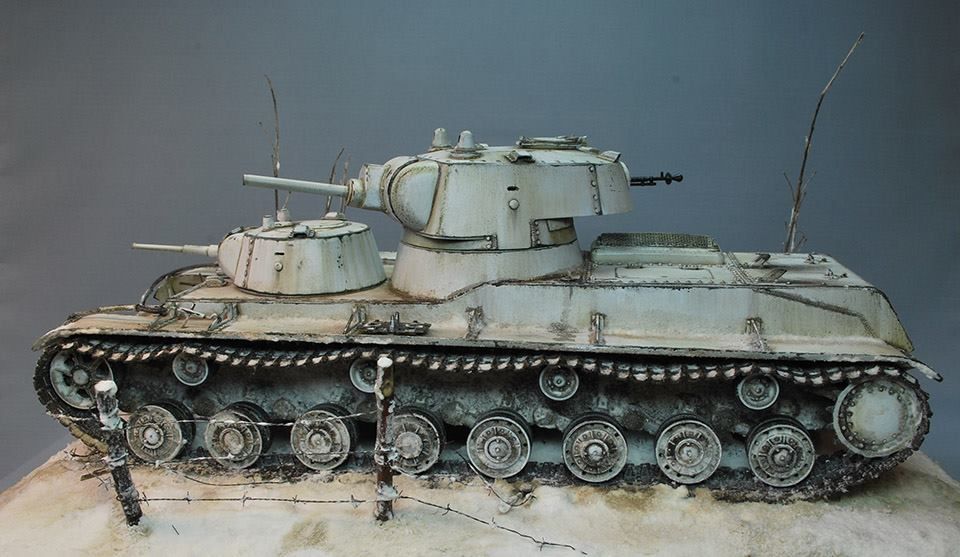
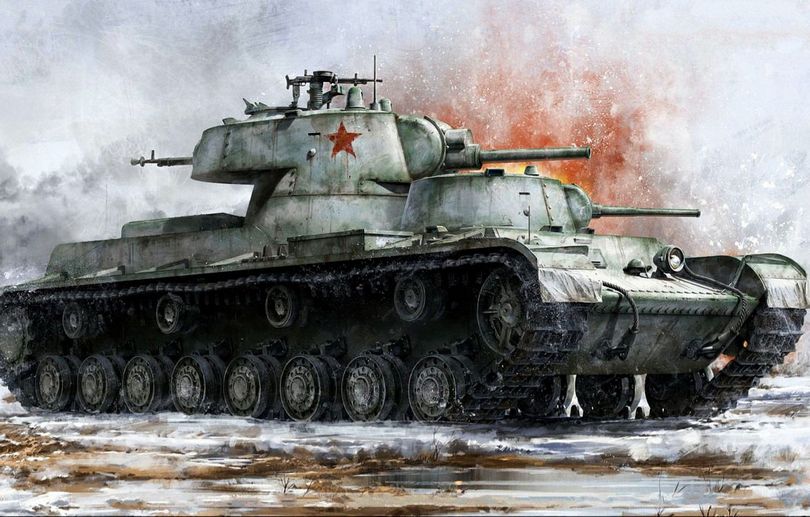
Before World War II, the Soviet Union saw a shift in tank development, moving away from Western influence and focusing on domestic designs. Two competing prototypes, the "SMK" and "T-100," were created to address the need for heavy ground attack tanks. Both shared multi-turret layouts with armor-piercing weaponry, but they failed to replace the earlier T-35 tank due to its insufficient armor against modern weapons.
The "SMK" tank, named after communist Sergei Mironovich Kirov, featured a main turret with a 76.2mm L-11 main gun and a smaller front turret equipped with a potent 45mm Type 1932 anti-tank gun and machine guns. However, the multi-turret concept added weight and complexity, leading to challenges in mobility and battlefield performance. The tank's armor ranged from 20mm to 60mm, designed to withstand hits from various anti-tank guns at different ranges. Despite their potential, these multi-turret tanks were often more suited for display and promotion than actual combat due to their unwieldy nature.
Specification
BASICS
Years of Service: 1939
Origins: Soviet Union
Crew: 7
Production: 1
Manufacturer: Leningrad Factory No. 100 - USSR
Roles
Fire Support/Attack/Breakthrough
Support allied forces with direct/indirect fire, attacking forward positions and/or breaking through fortified areas of the battlefield.
Tank vs. Tank
Fight with armored vehicles of similar form and function.
Dimensions and Weight
Length: 28.7 feet (8.75m)
Width: 11. 0 feet (3.35m)
Height: 11.0 feet (3.35m)
Weight: 110,231 lbs (50,000 kg)
Tonnage: 55.1 tons
Power and Performance
Engine: 1 x GAM-34BT 12 cylinder 850hp petrol engine driving a conventional sprocket arrangement.
Speed: 21.7 km/h (35.0km/h)
Area: 136. 7 miles (220.0 km)
Weapons
1 x 76.2mm main gun is located in the main turret.
1 x 45 mm Type 1932 main gun in the secondary gun.
3 x 7.62mm DT machine guns.
 Argentina
 Armenia
 Australia
 Austria
 Austria-Hungary
 Belgium
 Brazil
 United Kingdom
 United States
 Brunei
 Bulgaria
 Canada
 Chile
Chile China
China Colonial America
 Colombia
 Confederate States
 Croatia
 Czech
Czech Denmark
 Egypt
Egypt Finland
 France
 Georgia
 Germany
 German Imperial
 Greece
 Holland
 Hungary
 India
India Indonesia
 Iran
Iran Iraq
Iraq Ireland
 Israel
 Italy
Italy Japan
Japan Japan (1940)
 Jordan
 Kingdom of Italy
 Malaysia
 Mexico
 Myanmar
 Nazi Germany
 Netherlands
 New Zealand
 North Korea
 Norway
 Pakistan
 Peru
Peru Philippines
 Poland
 Portugal
 Prussia
 Romania
 Russia
 Saudi Arabia
 Serbia
 Singapore
 Slovakia
 Slovenia
 South Africa
 South Korea
 Spain
Spain Sweden
 Switzerland
 Syria
Syria Taiwan
 Thailand
 Turkey
 UAE
UAE Ukraine
 Vietnam
 Yugoslavia