
History
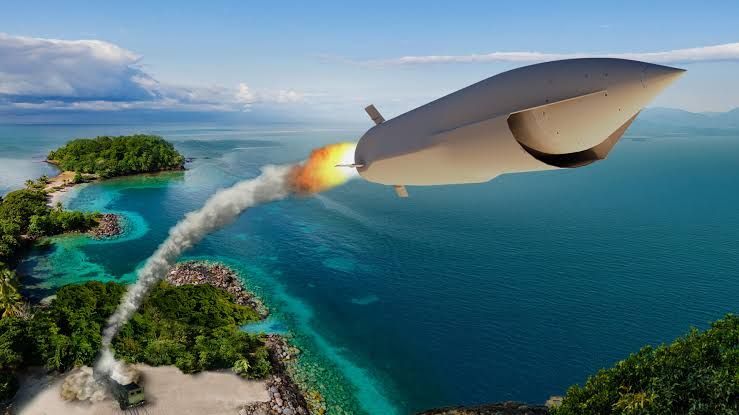
Precision Strike Missile Increment 4, or PrSM Increment 4, is a U.S. Army program to develop a new long-range precision-strike missile capable of engaging moving land and maritime targets. The Army requires a range of at least 1,000 km, approximately twice the stated range of the baseline Precision Strike Missile.
Increment 4 remains under prototype development rather than operational service. The program is structured as a competition among multiple companies, with prototypes required to be compatible with the M142 High Mobility Artillery Rocket System.
The Increment 4 effort forms part of the broader Precision Strike Missile program, which was created to replace the MGM-140 ATACMS family. Australia also participates in the broader cooperative PrSM development effort and has committed to participation in Increment 4.
Development
In 2023, the U.S. Army awarded initial development contracts for the Increment 4 effort to Lockheed Martin and a team formed by RTX and Northrop Grumman. These activities focused on design and risk reduction for missiles intended to extend PrSM engagement distances beyond 1,000 km.
The Army reopened the Increment 4 competition in April 2026. In September 2026, it selected Anduril, Castelion, Lockheed Martin, Mach Industries and RTX to develop prototype missiles under Other Transaction Authority agreements. The new agreements established a broader competitive field and required each participant to develop a missile capable of launch from the M142 HIMARS.
The planned competition calls for prototype development during fiscal year 2027, concluding with a competitive fly-off and an initial down-select. A final fly-off is planned for fiscal year 2028. The Army may conduct the final program down-select in fiscal year 2030.
Testing
Lockheed Martin has pursued an advanced-propulsion Increment 4 design. In June 2026, testing at an L3Harris propulsion facility demonstrated the transition from booster propulsion to a ramjet system for the Lockheed Martin offering. Full flight testing of that design was planned to begin in fall 2026. These propulsion details apply specifically to Lockheed Martin's competitor and are not confirmed characteristics of every Increment 4 prototype.
Design
The Army's Increment 4 requirement centers on a long-range missile able to attack moving maritime and land targets at distances of at least 1,000 km. The missile must be compatible with the M142 HIMARS launcher, preserving integration with the Army's existing mobile rocket-artillery infrastructure.
The program also requires an open systems architecture. This is intended to allow hardware and software components to be integrated or replaced without redesigning the entire weapon system. The Increment 4 prototypes are also required to operate under an Indo-Pacific operational scenario specified by the Army.
Because five companies are developing competing prototypes, Increment 4 does not yet represent a single finalized missile configuration. Propulsion arrangements, internal architecture, guidance details, dimensions, mass and other characteristics may differ among the competing designs. Only requirements common to the program can therefore be treated as established characteristics of Increment 4 as a whole.
Program status
As of September 2026, Precision Strike Missile Increment 4 was in competitive prototype development. Anduril, Castelion, Lockheed Martin, Mach Industries and RTX held agreements to build prototype missiles for the U.S. Army.
The first major competitive fly-off is planned for fiscal year 2027 and is expected to support an initial reduction in the number of competing designs. A further fly-off is planned for fiscal year 2028, while a final selection could occur in fiscal year 2030. Increment 4 has therefore not yet entered production or operational service.
Competing prototypes
- Anduril prototype: Selected in 2026 for development under the Army's Increment 4 prototype competition. Detailed configuration data have not been disclosed in the supplied evidence.
- Castelion prototype: Selected in 2026 for development under the Increment 4 competition. Detailed configuration data have not been disclosed in the supplied evidence.
- Lockheed Martin prototype: An advanced-propulsion Increment 4 design. Its propulsion testing demonstrated a booster-to-ramjet transition in June 2026, with full flight testing planned afterward.
- Mach Industries prototype: Selected in 2026 for development under the Increment 4 competition. Detailed configuration data have not been disclosed in the supplied evidence.
- RTX prototype: Selected in 2026 for the renewed competition. RTX had also participated in the earlier Increment 4 development effort with Northrop Grumman.
Specifications (Increment 4 prototype requirement)
General characteristics
- Type: Long-range precision-strike missile under prototype development
- Launcher: M142 High Mobility Artillery Rocket System
- Architecture: Open systems architecture required
- Primary target set: Moving land and maritime targets
Performance
- Required range: At least 1,000 km
Program requirements
- Operational environment: Required to operate in an Indo-Pacific scenario specified by the U.S. Army
- Planned initial competitive fly-off: Fiscal year 2027
- Planned final fly-off: Fiscal year 2028
- Possible final down-select: Fiscal year 2030
 Argentina
 Armenia
 Australia
 Austria
 Austria-Hungary
 Belgium
 Brazil
 United Kingdom
 Brunei
 Bulgaria
 Canada
 Chile
Chile China
China Colonial America
 Colombia
 Confederate States
 Croatia
 Czech
Czech Denmark
 Egypt
Egypt Finland
 France
 Georgia
 Germany
 German Imperial
 Greece
 Holland
 Hungary
 India
India Indonesia
 Iran
Iran Iraq
Iraq Ireland
 Israel
 Italy
Italy Japan
Japan Japan (1940)
 Jordan
 Kingdom of Italy
 Malaysia
 Mexico
 Myanmar
 Nazi Germany
 Netherlands
 New Zealand
 North Korea
 Norway
 Pakistan
 Peru
Peru Philippines
 Poland
 Portugal
 Prussia
 Romania
 Russia
 Saudi Arabia
 Serbia
 Singapore
 Slovakia
 Slovenia
 South Africa
 South Korea
 Soviet Union
 Spain
Spain Sweden
 Switzerland
 Syria
Syria Taiwan
 Thailand
 Turkey
 UAE
UAE Ukraine
 Vietnam
 Yugoslavia