

History of HMCS Halifax (FFH-330)
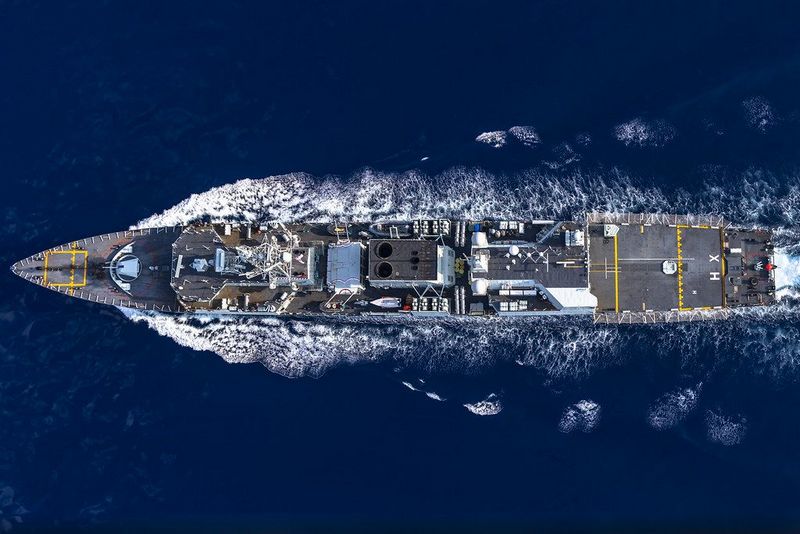
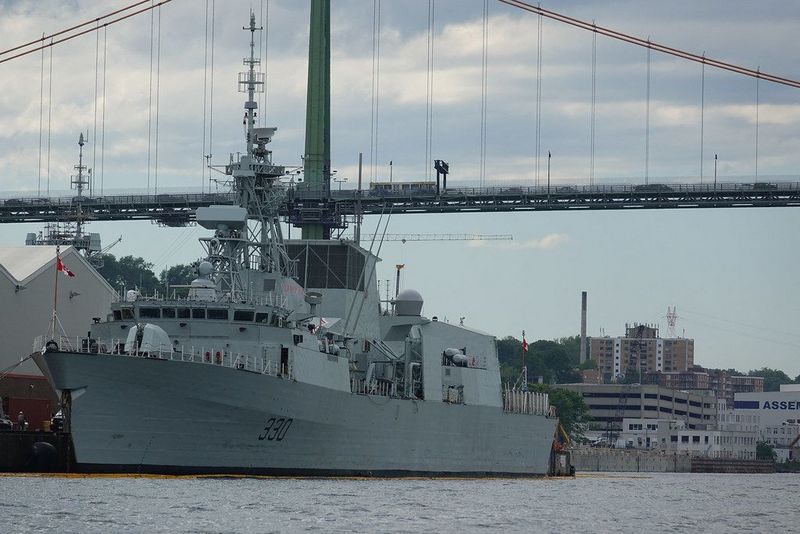
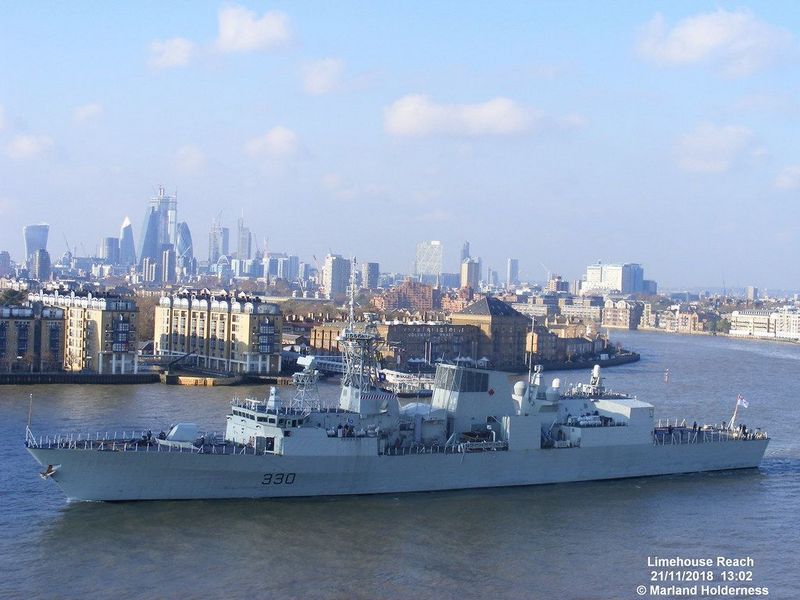
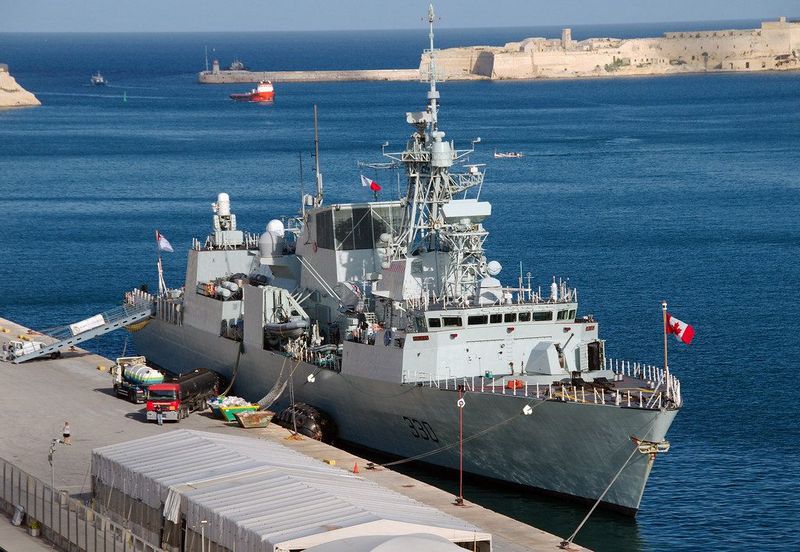
The current core force of the Royal Canadian Navy (RCN) surface fleet is the Halifax-class multi-role frigate. These are twelve combat ships from the 1977 order.
About twenty were originally intended, but due to delays (the first order was not awarded until June 1983) and cost issues, only a dozen were eventually completed and commissioned. All remain active in the modern Canadian fleet.
The class was ordered in two batches of six each. St. John's Shipbuilding Ltd., Paramax Electronics (later Loral Canada) and Marine Industries (later MIL-Davie) were built as a spin-off.
With this propulsion scheme, Halifax is able to reach speeds of up to 30 knots and a range of up to 9,500 nautical miles on the high seas.
Structural dimensions include 400 ft overall length, 54 ft beam and 23 ft draft.
HMCS Halifax's shipboard systems and capabilities were upgraded in 2000 as part of the "FELEX" program ("Fregate Equipment Life EXtension"). In 2002, the Westtronic 14 electro-optical fire control system was installed.
As mentioned above, the evolved Sea Sparrow weapon system also replaced the original Sea Sparrow system, and the introduction of the Sikorsky CH-148 Tornado helicopter replaced support for the CH-124 model. Countermeasures, sensors and processing systems have also been overhauled to better keep Halifax a viable platform for the foreseeable future.
Halifax was commissioned in June 1991 and sea trials were conducted the following year. She served in 1992 and her first war-related operation was during the Yugoslav conflict, when she lifted HMCS Iroquois in April 1994, which was then undergoing a blockade operation. A NATO exercise followed in 1995.
Deployed to the Adriatic region in March 1996, she conducted another NATO exercise before searching for survivors of Swissair Flight 111 (there were no survivors of the crash). After the September 11, 2001, attack on the World Trade Center, she was sent to the Indian Ocean to support U.S. initiatives against the Taliban/Al Qaeda.
She returned to her home waters in February 2002.
In 2010, she traveled to Haitian waters to support humanitarian work following the earthquake that destroyed the island in January 2010. In September 2010, she received another modernization. In September 2015, she took part in a new NATO exercise, by which time she had tested her new Cyclone helicopter.
A year-long refit took place in 2016 before Halifax returned to service in September 2017.
RCN is actively planning to replace the Halifax-class frigates in the coming years.
Specification
Basic
Roles
- Blue Water Operations
- Fleet Support
- Hunter
- direct attack
Dimensions
440 ft (134.11 m)
54 feet (16.46 m)
23 feet (7.01 m)
Weight
5,300 tons
Performance
Performance
30 kn (35 mph)
9,559 nautical miles (11,000 miles; 17,703 km)
Armor
1 x 57 mm Bofors Mk 2 deck gun with turret.
16 x Evolved Sea Sparrow anti-aircraft missile launchers.
8 x RGM-84 Harpoon surface-to-surface/anti-ship missiles in two quad launchers.
1 x 20mm Vulcan Phalanx Close-In Weapon System (CIWS).
6 x 12.7mm heavy machine gun.
24 x Honeywell Mk 46 Torpedoes.
Wing
1 x Sikorsky CH-148 Tornado anti-submarine warfare (ASW) helicopter). Aft helipad and full service hangar to support one medium lift helicopter.
ORIGINAL:
1 x Sikorsky CH-124 "Sea King" ASW helicopter.
 Argentina
 Armenia
 Australia
 Austria
 Austria-Hungary
 Belgium
 Brazil
 United Kingdom
 United States
 Brunei
 Bulgaria
 Chile
Chile China
China Colonial America
 Colombia
 Confederate States
 Croatia
 Czech
Czech Denmark
 Egypt
Egypt Finland
 France
 Georgia
 Germany
 German Imperial
 Greece
 Holland
 Hungary
 India
India Indonesia
 Iran
Iran Iraq
Iraq Ireland
 Israel
 Italy
Italy Japan
Japan Japan (1940)
 Jordan
 Kingdom of Italy
 Malaysia
 Mexico
 Myanmar
 Nazi Germany
 Netherlands
 New Zealand
 North Korea
 Norway
 Pakistan
 Peru
Peru Philippines
 Poland
 Portugal
 Prussia
 Romania
 Russia
 Saudi Arabia
 Serbia
 Singapore
 Slovakia
 Slovenia
 South Africa
 South Korea
 Soviet Union
 Spain
Spain Sweden
 Switzerland
 Syria
Syria Taiwan
 Thailand
 Turkey
 UAE
UAE Ukraine
 Vietnam
 Yugoslavia