
History
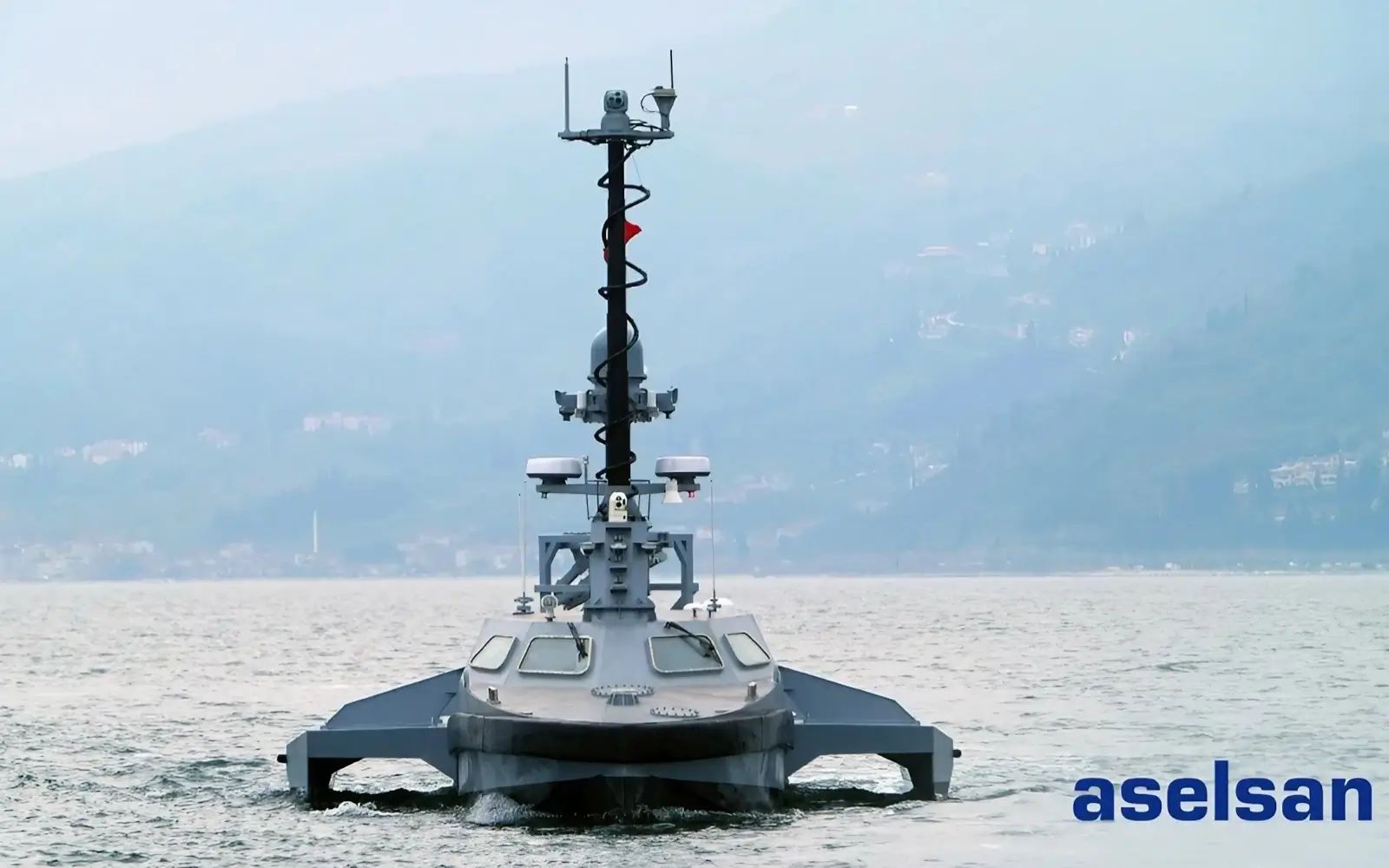
The Marlin is a Turkish family of unmanned surface vehicles jointly developed by Sefine Shipyard and ASELSAN for naval surveillance, security, and combat missions. The platform uses a modular mission architecture and has been presented in monohull and trimaran configurations for anti-surface warfare, anti-submarine warfare, electronic warfare, amphibious support, and other maritime tasks.
The first Marlin entered the Turkish Navy inventory on 19 January 2024 as TCB 1101. By 2025, the developers were publicly presenting both monohull and trimaran versions with different payload and weapon configurations.
In August 2026, the monohull Marlin demonstrated a naval mine-laying capability using the Turkish-developed MALAMAN smart bottom mine. The trial included mine deployment in both autonomous and remotely controlled modes, expanding the vessel's demonstrated mission set.
Development and service introduction
Marlin was developed by Sefine Shipyard and ASELSAN under the coordination of Türkiye's Presidency of Defence Industries. Sefine Shipyard is responsible for the vessel platform and integration work, while ASELSAN supplies mission, sensor, electronic-warfare, and other systems. Roketsan equipment has also been associated with weapon configurations displayed for the platform.
The first Marlin USV was commissioned into the Turkish Navy on 19 January 2024 as TCB 1101. The vessel became the first unmanned surface vehicle to enter the Turkish Navy inventory. It subsequently served as a platform for testing several mission configurations, including anti-surface warfare, anti-submarine warfare, and electronic warfare.
At NAVDEX 2025, TAIS Shipyards and ASELSAN presented Marlin in both monohull and trimaran forms. The two configurations retained a common 15 m length but differed in beam, displacement, speed, and possible weapon loads.
Mine-laying development
Mine-laying work was conducted by Sefine Shipyard's Strategic and Unmanned Systems Research Center, known as SİSAM, together with Koç Defence and under coordination associated with Turkish naval requirements. The development effort lasted approximately 12 months and included the design and manufacture of the mine carriage and release system, mission-planning interfaces, and algorithms for autonomous and remotely controlled mine deployment.
Verification work was completed at Sefine Shipyard using a training version of the MALAMAN mine. Trials were conducted near Erdek Naval Base in August 2026. During the demonstration, the Marlin deployed the training mine in both autonomous and remotely controlled modes. The capability was reported by Janes, Naval News, and Defence and Technology.
Design
Hull and propulsion
Marlin is available in monohull and trimaran configurations. The monohull version is 15 m long. Sources give its beam as approximately 3.85-4 m and its displacement as about 21-21.5 tonnes. The trimaran is also 15 m long but has a beam of 7.7 m and a reported displacement of 23.5 tonnes.
Both configurations use two diesel engines driving two water jets. TAIS also lists an alternative arrangement using two azimuth-driven dynamic-positioning units. The platform is designed around an unmanned architecture and can be controlled remotely, while selected missions can be conducted autonomously.
Navigation and communications
The navigation suite listed by TAIS includes radar, magnetic and gyro compasses, GPS, an echosounder, an electromagnetic log, and an Automatic Identification System. Other reported equipment includes an anti-jam GNSS system, obstacle-avoidance sonar, the KIRLANGIC electro-optical and infrared camera, and the ANS510-D inertial navigation system.
Communications equipment includes broadband and narrowband satellite communications, radio-frequency communications, and 4G/LTE links. These systems support remote control, mission data exchange, and operation beyond direct line of sight when suitable communications are available.
Mission systems and armament
Marlin uses a modular payload concept intended to support different mission packages. Listed primary missions include anti-surface warfare, anti-submarine warfare, amphibious operations, and electronic warfare. Secondary tasks include engagement of surface and shore targets with missiles, response to asymmetric threats, cooperation with unmanned aerial vehicles for targeting, and interoperability with other forces.
Published configurations for the monohull include up to 20 KUZGUN surface-to-surface missiles, four L-UMTAS missiles, eight CİRİT missiles, four torpedoes, and a STAMP remote-controlled weapon station with a 12.7 mm machine gun. The trimaran has been presented with possible loads of up to 40 KUZGUN missiles, eight L-UMTAS missiles, 16 CİRİT missiles, eight torpedoes, and the same type of 12.7 mm remote weapon station. These are configurable weapon options rather than a single fixed armament fit.
Electronic-warfare configurations have been associated with the ARES 2NC electronic-support-measures system and AREAS 2NC electronic-countermeasures equipment. An active stabilization system is also listed among the vessel's available systems.
Mine-laying system
The 2026 mine-laying configuration added equipment for carrying and releasing the MALAMAN smart bottom mine. The integration included mission-planning interfaces and software for both autonomous and remotely controlled deployment. The demonstration used a training mine rather than an operational explosive weapon.
MALAMAN is a Turkish-developed bottom mine intended for deployment from several types of platforms. Its integration with Marlin provided an unmanned surface-vessel deployment option in addition to other planned or tested delivery methods.
Operational history
The Turkish Navy operates the monohull Marlin TCB 1101, commissioned in January 2024. The vessel has been used as a test platform for multiple mission configurations. Publicly reported activities include missile-related trials and demonstrations of anti-surface, anti-submarine, and electronic-warfare mission concepts.
In August 2026, Marlin completed mine-laying trials near Erdek Naval Base. The vessel successfully released a training MALAMAN mine under both autonomous and remote control. The demonstration verified the integrated mine-release hardware, mission-planning functions, and associated control algorithms.
Variants
- Marlin monohull: 15 m configuration used by the Turkish Navy and employed during the 2026 MALAMAN mine-laying demonstration. It has a displacement of approximately 21-21.5 tonnes and a payload capacity reported at about 4,000 kg or more.
- Marlin trimaran: Wider 15 m configuration presented with a 7.7 m beam, approximately 23.5-tonne displacement, and increased potential weapon capacity compared with the monohull.
Operators
- Türkiye: Turkish Navy operates the monohull Marlin TCB 1101, commissioned on 19 January 2024.
Specifications (Marlin monohull)
General characteristics
- Length: 15 m
- Beam: approximately 3.85-4 m
- Draft: approximately 0.8-0.82 m
- Displacement: approximately 21-21.5 tonnes
- Payload: approximately 4,000 kg or more
- Propulsion: two diesel engines driving two water jets; TAIS also lists an azimuth-driven dynamic-positioning option
Performance
- Maximum speed: reported as 36 knots in one 2025 presentation; TAIS lists a speed figure of more than 45 knots and a separate 19-knot figure
- Range: 1,000 nautical miles
- Endurance: approximately 4-7 days; TAIS lists 7 days
Armament options
- Missiles: configurations published with up to 20 KUZGUN, four L-UMTAS, and eight CİRİT surface-to-surface missiles
- Torpedoes: up to four
- Gun: 12.7 mm STAMP remote-controlled weapon station
- Mine-laying: demonstrated with a training MALAMAN smart bottom mine in autonomous and remotely controlled modes
Sensors and electronic systems
- Navigation: radar, magnetic compass, gyro compass, GPS, echosounder, electromagnetic log, and AIS
- Electro-optical system: KIRLANGIC EO/IR camera
- Navigation aid: ANS510-D inertial navigation system
- Obstacle avoidance: sonar
- Electronic warfare: ARES 2NC ESM and AREAS 2NC ECM configurations
- Communications: broadband and narrowband satellite communications, RF communications, and 4G/LTE
Manufacturer data for Marlin is also published by TAIS Shipyards. A 2025 description of the monohull and trimaran configurations was published by EDR Magazine.
 Argentina
 Armenia
 Australia
 Austria
 Austria-Hungary
 Belgium
 Brazil
 United Kingdom
 United States
 Brunei
 Bulgaria
 Canada
 Chile
Chile China
China Colonial America
 Colombia
 Confederate States
 Croatia
 Czech
Czech Denmark
 Egypt
Egypt Finland
 France
 Georgia
 Germany
 German Imperial
 Greece
 Holland
 Hungary
 India
India Indonesia
 Iran
Iran Iraq
Iraq Ireland
 Israel
 Italy
Italy Japan
Japan Japan (1940)
 Jordan
 Kingdom of Italy
 Malaysia
 Mexico
 Myanmar
 Nazi Germany
 Netherlands
 New Zealand
 North Korea
 Norway
 Pakistan
 Peru
Peru Philippines
 Poland
 Portugal
 Prussia
 Romania
 Russia
 Saudi Arabia
 Serbia
 Singapore
 Slovakia
 Slovenia
 South Africa
 South Korea
 Soviet Union
 Spain
Spain Sweden
 Switzerland
 Syria
Syria Taiwan
 Thailand
 UAE
UAE Ukraine
 Vietnam
 Yugoslavia