
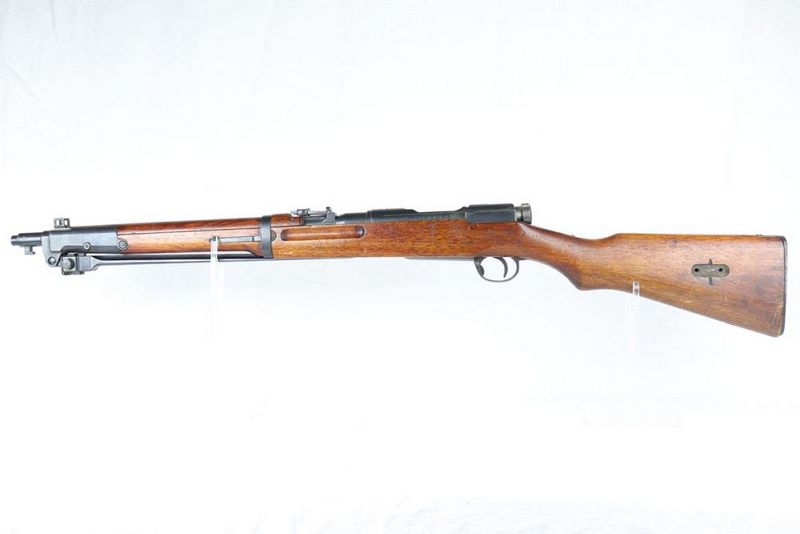
History of the Arisaka 44 Cavalry Rifle
The Type 44 Carbine (also known as the Type 44 "Cavalry Rifle") is a standard bolt-action carbine for the Japanese Army, designed in 1911 by the famous Japanese gunsmith Baron Arisaka Nariakira and put into service with the Imperial Army. Japanese Army of 1912 (IJA) The type had a long and eventful career in the ranks of the IJA and was produced during World War II until 1942. As a result, the weapon served in various conflicts in the country during this time and survived in circulation long enough to see combat action in the upcoming civil wars in Korea and China. The "carbine" or "cavalry rifle" classification describes the weapon as a shortened version of the existing "long rifle" design - the bolt-action Type 38, itself a further development of the Type 38 Cavalry Rifle. So the Type 44 is based on the Type 38 cavalry rifle.
The carbine was designed to provide the firepower of a traditional long rifle in a more compact body, suitable for cavalry (cavalry) use, which often involved shortening the barrel assembly while leaving the rest of the design as-is - essentially for logistical support A friendlier end product.
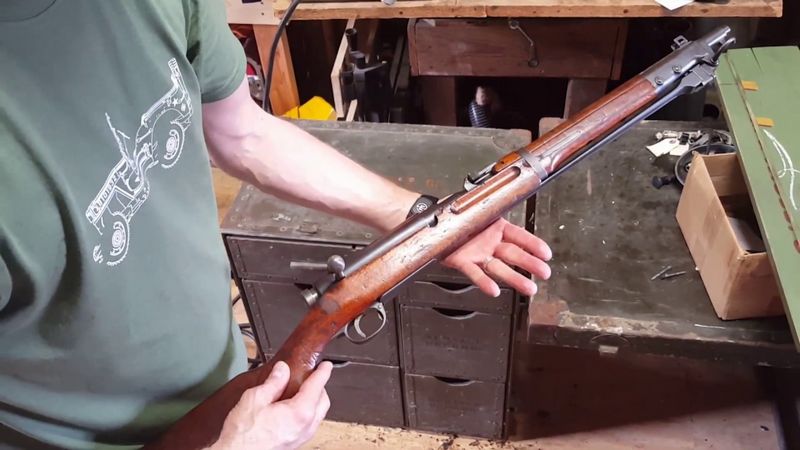
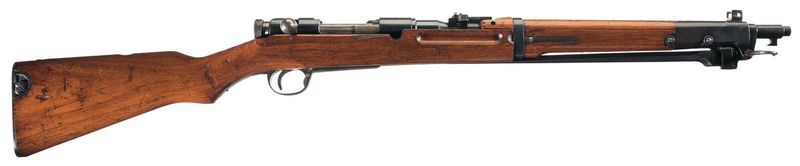
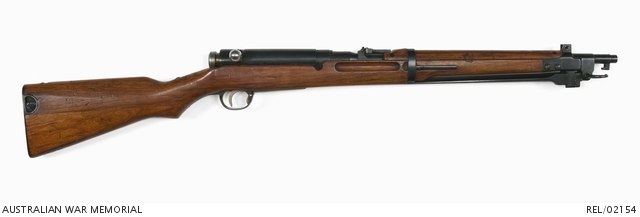
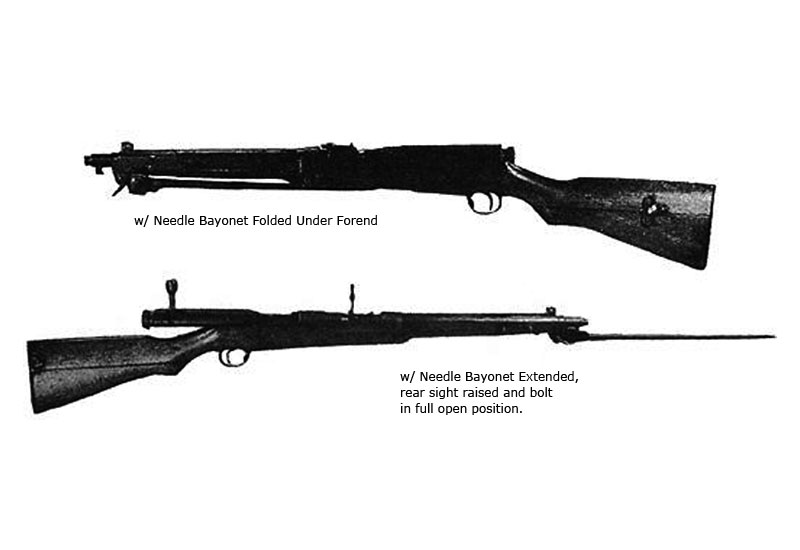
Although its ancestor is based on the Type 38 series, the Type 44 is known for using "needle" bayonet lugs (as opposed to traditional blades). This unit folds back and locks under the front end when not in use, maintaining the Model 44's compact size. The Type 44's design is primarily a wooden body with ergonomic shoulder rests, a ring trigger guard and internal metal components. These parts are usually placed at the rear of the receiver, while the wooden front end wraps the barrel and allows for minimal muzzle protrusion.
Iron sights were mounted on the muzzle, and a flip-up device was found on top of the center receiver.
As a bolt-action system, the Type 44 relies on the operator to manually operate the bolt mechanism to eject spent cartridges and insert new ones for firing. The latch has a typical design and orientation, locks with a button, and mounts on the back of the receiver. The user lifts the bolt handle, pulls the handle back, sets the handle forward again, and lowers the handle to the side of the frame, ready to fire the carbine.
Each round must be managed in this way, which directly links the weapon's rate of fire to the speed of the operator himself. Ideally, the stock rests firmly on the shooter's shoulder for more accurate results, while the unfired hand supports the front of the weapon.???
The 44 measures 38.3 inches long and weighs 7.28 pounds. By comparison, the Arisaka Type 99 infantry rifle is 44 inches long and weighs 8.6 pounds. Both guns fired the same 6.5x50mm Arisaka cartridge, which proved to do the most damage to the target as it had a tendency to fall into the air and rupture on impact (in later years, especially with 2. the 6. 5 Arisaka is considered outdated compared to contemporary offerings elsewhere). The carbine is fed from a 5-round "stripper" magazine inserted into the weapon's internal magazine. The use of the ejector clip means that the carbine must fire all five rounds before reloading (so the user cannot "add" more rounds to a half-used magazine).
From a tactical point of view, this limits the Type 44.
Strippers are usually just individual, ready-to-fire cartridges that attach to a metal or heavy-duty plastic "clip" on the bottom. The user places the magazines on the weapon's magazine wells (designed to accommodate the ejector clips) and applies pressure to the cartridges, then "pulls" each cartridge cleanly from the magazines and stacks them properly. in the internal magazine. Empty magazines can then be discarded or (in some designs) reused by adding new cartridges and reinserting them into the gun. This method is a preferred feeding mechanism over manually loading bullets into the gun individually.
The British refer to strippers as "chargers", while "strippers" have become a more popular term elsewhere.
Prior to World War II, Japan was already at war with neighboring China over its natural resources, and this extensive conflict proved to be a highly mobile effort for the IJA, requiring tens of thousands of Service of the Japanese Army. It goes to contain and conquer the country. Therefore, cavalry was used where possible to wage war, especially in areas where the main roads were inaccessible.
The shorter Model 44 carbine was favored in such engagements, and Japanese soldiers generally considered the Model 44's weight and length to be beneficial, considering that the average IJA soldier was only 5 feet 4 inches tall. The bayonet lug is another important device, especially in hand-to-hand combat, where using a sharp weapon longer than an arm's length is preferable to using a gun longer than a pistol.
In practice, the Type 44 exhibited slight recoil when fired, with little to no visible muzzle flash, which helped conceal the gunner's position while walking and hiding from ambush. The system also benefits from minimal maintenance requirements, and its basic use requires little training.
The rather simple design used in the manufacture of the Type 44 saw this weapon issued in the thousands alongside the standard infantry long rifle.
A total of approximately 92,000 Type 44 carbines were produced in the Japanese arsenal.
Specification
Roles
- Close Combat (CQB) / Personal Protection
Dimensions
966 mm (38.03 in)
487 mm (19.17 in)
3.30 kg
Iron Frontline;Flip Back
Performance
Manual bolt action
2,246 ft/s (685 m/s)
10 rounds per minute
1,968 ft (600 m; 656 yd)
Changes
Type 44 (Gen 1) - Initial production form.
Type 44 (Second Generation) - Improved Type 44
Type 44 (Third Generation) - Final production form.
 Argentina
 Armenia
 Australia
 Austria
 Austria-Hungary
 Belgium
 Brazil
 United Kingdom
 United States
 Brunei
 Bulgaria
 Canada
 Chile
Chile China
China Colonial America
 Colombia
 Confederate States
 Croatia
 Czech
Czech Denmark
 Egypt
Egypt Finland
 France
 Georgia
 Germany
 German Imperial
 Greece
 Holland
 Hungary
 India
India Indonesia
 Iran
Iran Iraq
Iraq Ireland
 Israel
 Italy
Italy Japan
Japan Jordan
 Kingdom of Italy
 Malaysia
 Mexico
 Myanmar
 Nazi Germany
 Netherlands
 New Zealand
 North Korea
 Norway
 Pakistan
 Peru
Peru Philippines
 Poland
 Portugal
 Prussia
 Romania
 Russia
 Saudi Arabia
 Serbia
 Singapore
 Slovakia
 Slovenia
 South Africa
 South Korea
 Soviet Union
 Spain
Spain Sweden
 Switzerland
 Syria
Syria Taiwan
 Thailand
 Turkey
 UAE
UAE Ukraine
 Vietnam
 Yugoslavia