
History
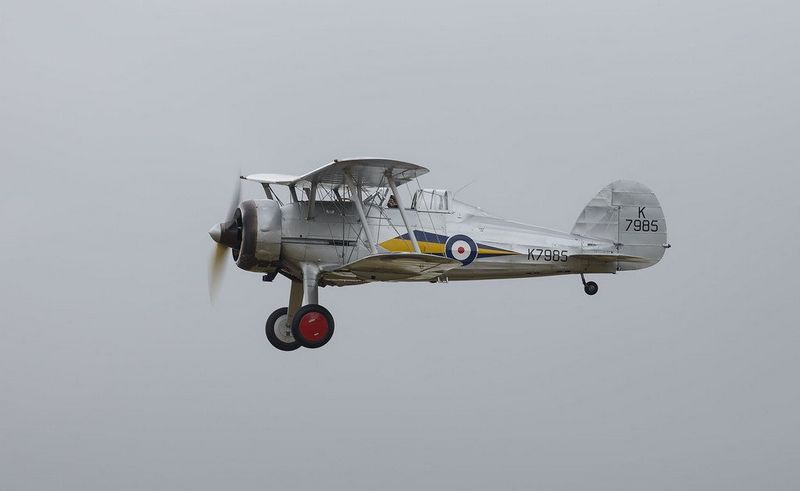
The Gloucester Gladiator, designed by Henry Philip Flanders for the Gloucester Aircraft Company, took its maiden flight in 1934 and was adopted by the Royal Air Force in 1937. This biplane aircraft marked the RAF's shift to closed cockpits. Despite its antiquated appearance, the Gladiator held its own, surprising Allies in the early stages of World War II. With over 700 units produced, including exports, the Gladiator became a symbol of aviation history.
The Gladiator's distinctive biplane design, reminiscent of earlier Gauntlet models, featured an enclosed cockpit that improved visibility for the pilot. Armed with four Browning machine guns, it showcased its combat capabilities. This aircraft played a pivotal role in several conflicts, such as the defense of Malta and engagements in North Africa, Finland, and Norway. Despite being outshone by modern counterparts, the Gladiator's resilience and the feats of its pilots secured its place in military legacy.
The Gladiator's impact extended beyond its operational period, serving as a testament to the early days of air combat. Its contributions during critical moments in World War II resonated with its successors. Although newer technology eventually replaced it, the Gladiator's story of adaptability and valor continues to inspire modern aviation.
Specification
Basic
Dimensions
Weight
Performance
Armor
2 x 7.7mm Browning machine guns synchronized and fired through the propeller system
2 x 7.7mm Browning machine guns on lower wings (1 per wing)
Changes
Mk I - Equipped with an air-cooled 840 hp Bristol Mercury IX radial piston engine.
Mk II - with Bristol Mercury VIIIA radial piston air-cooled engine.
Marine Gladiator - Royal Navy designation; equipped with arresters for shipborne operations; 38 are considered "intermediate" models, while another 60 are produced as base models for the Navy.
J 8 - Swedish Air Force designation Mk I.
J 8A - Swedish Air Force designation Mk II.
 Argentina
 Armenia
 Australia
 Austria
 Austria-Hungary
 Belgium
 Brazil
 United States
 Brunei
 Bulgaria
 Canada
 Chile
Chile China
China Colonial America
 Colombia
 Confederate States
 Croatia
 Czech
Czech Denmark
 Egypt
Egypt Finland
 France
 Georgia
 Germany
 German Imperial
 Greece
 Holland
 Hungary
 India
India Indonesia
 Iran
Iran Iraq
Iraq Ireland
 Israel
 Italy
Italy Japan
Japan Japan (1940)
 Jordan
 Kingdom of Italy
 Malaysia
 Mexico
 Myanmar
 Nazi Germany
 Netherlands
 New Zealand
 North Korea
 Norway
 Pakistan
 Peru
Peru Philippines
 Poland
 Portugal
 Prussia
 Romania
 Russia
 Saudi Arabia
 Serbia
 Singapore
 Slovakia
 Slovenia
 South Africa
 South Korea
 Soviet Union
 Spain
Spain Sweden
 Switzerland
 Syria
Syria Taiwan
 Thailand
 Turkey
 UAE
UAE Ukraine
 Vietnam
 Yugoslavia