
History
For decades, rocket launchers have been a mainstay against ground forces. The Soviet Union recognized its value very well during World War II (1939-1945) during its push to Berlin, and today many national armies maintain an inventory of such vehicles in modernized form.
These systems are capable of firing a variety of warheads (including chemicals and submunitions) from positions behind the front linean inexpensive but very useful battlefield measure.
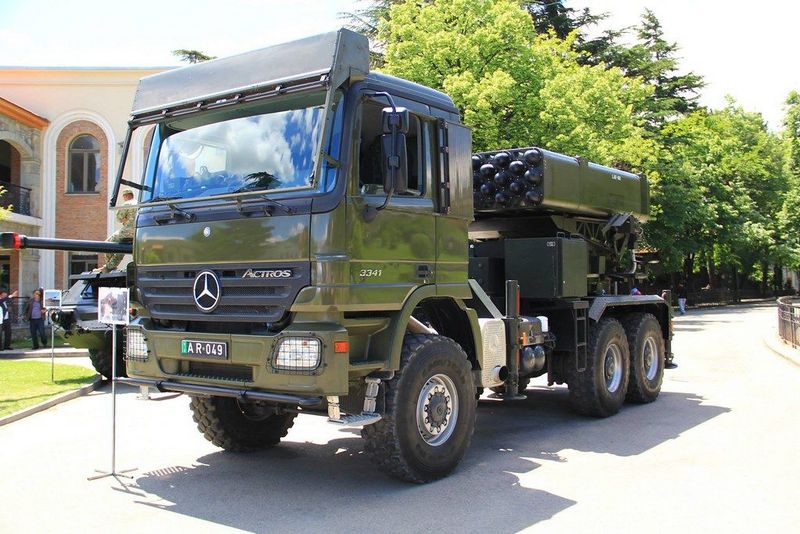
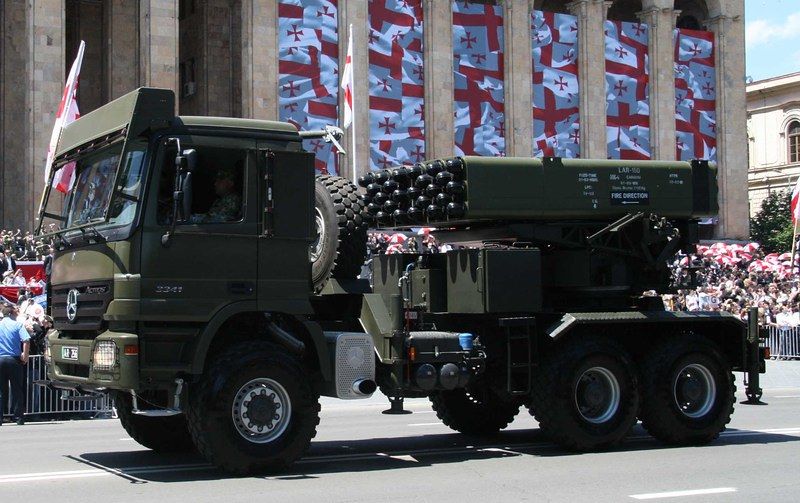
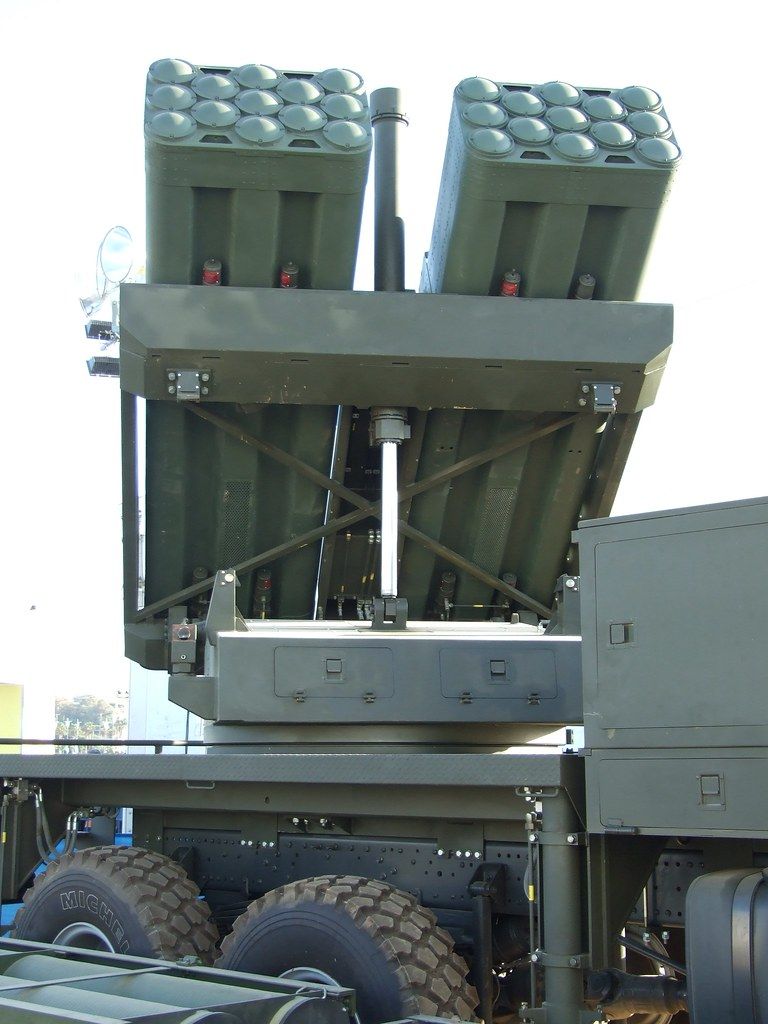
In the late 1970s, Israel Military Industries (IMI) began work on a new missile launcher known as the "LAR-160". The package contains 13 160mm caliber 3.4m rockets in a sturdy casing. This case can then be paired with another (26 missiles in total) and combined with a traversing mechanism to provide tactical flexibility and vehicle maneuverability.
The launcher has a quick set-up function that is ready to fire in a short time and clears the missile tube within 60 seconds. The reload completes in five minutes. The missile has a range of 45 kilometers.
The original missile was the "Mark I", a 100kg weapon that carried a 40kg HE-COFRAM warhead (detonated by impact or proximity fuze). After that came the "Mark II," which introduced a 100-pound warhead for a total weight of 250 pounds.
The warhead can be variable and matched to the original HE-COFRAM or submunitions - the latter of which are released over a target area to create an area saturation effect - useful against enemy infantry concentrations. The Mark IV is another modern missile development of the LAR-160 system.
In addition to being incorporated into the Israel Defense Forces (IDF), the LAR-160 was eventually purchased by the armed forces of Azerbaijan, Georgia, Kazakhstan and Chile. Argentina uses the LAR-160 system through its TAM vehicle "VCLC", and Romania has developed a local variant (with the support of Israel) as "LAROM".
The Venezuelan form can be seen using the French AMX-13 tank chassis.
It is known that the LAR-160 system was used in combat operations in the 2008 South Ossetia war between Georgia and Russia (with the Georgian army).
Specification
Basic
Roles
- fire support/attack/damage
Dimensions
16.01 ft (4.88 m)
8.20 ft (2.5 m)
9. 84 feet (3 m)
13 tons (11,800 kg; 26,015 lb)
Performance
Performance
55 km/h
217 miles (350 km)
Armor
26 x 160mm rockets (2 x 13 rocket packs)
Alternatives:
36 x 160mm rockets (2 x 18 rocket packs)
26 x 160 mm rocket; reload depends on ammunition carrier.
Changes
LAR-160 - Name of the base series; available in 13 and 18 round rocket packs.
TAM VCLC - Argentine platform
LAROM - Local Development in Romania
LAR-160 AMX - Venezuelan version, using the LAR-160 system with the French AMX-13 light tank chassis.
 Argentina
 Armenia
 Australia
 Austria
 Austria-Hungary
 Belgium
 Brazil
 United Kingdom
 United States
 Brunei
 Bulgaria
 Canada
 Chile
Chile China
China Colonial America
 Colombia
 Confederate States
 Croatia
 Czech
Czech Denmark
 Egypt
Egypt Finland
 France
 Georgia
 Germany
 German Imperial
 Greece
 Holland
 Hungary
 India
India Indonesia
 Iran
Iran Iraq
Iraq Ireland
 Italy
Italy Japan
Japan Japan (1940)
 Jordan
 Kingdom of Italy
 Malaysia
 Mexico
 Myanmar
 Nazi Germany
 Netherlands
 New Zealand
 North Korea
 Norway
 Pakistan
 Peru
Peru Philippines
 Poland
 Portugal
 Prussia
 Romania
 Russia
 Saudi Arabia
 Serbia
 Singapore
 Slovakia
 Slovenia
 South Africa
 South Korea
 Soviet Union
 Spain
Spain Sweden
 Switzerland
 Syria
Syria Taiwan
 Thailand
 Turkey
 UAE
UAE Ukraine
 Vietnam
 Yugoslavia